

Despite being both in extremely high demand and not particularly rare, lithium production faces a severe bottleneck because of the difficulties of moving new production technologies and projects from demonstration to large-scale commercial operation, while managing environmental, social, permitting, safety, and economic risks that can delay or constrain project development. Conventional lithium supply rests on hard rock and brine, and on refineries that turn their concentrates into battery chemicals. At every stage, attempts to expand production have collided with environmental concerns, legal challenges, injured workers, or economics, which is why scalability has become the defining test of any new lithium technology.
Alternative production technologies are being evaluated in part because they seek to reduce the complexity, environmental footprint, and capital intensity associated with conventional production routes. Direct Lithium to Product® (DLP™) was developed to address these scalability challenges by reducing processing complexity and producing battery-grade lithium hydroxide or carbonate directly from lithium-bearing solutions.
Hard-Rock Lithium Mining: Environmental and Permitting Challenges
Hard rock ore, usually spodumene, must be mined, crushed, and concentrated before any chemistry begins, and the development of these mines has at times raised environmental concerns and led to disputes over land and water impacts. Many hard-rock lithium operations operate safely and successfully around the world and remain an essential source of current lithium supply. However, the industry’s experience demonstrates that scaling new production can involve significant permitting, environmental, community-relations, and operational challenges.
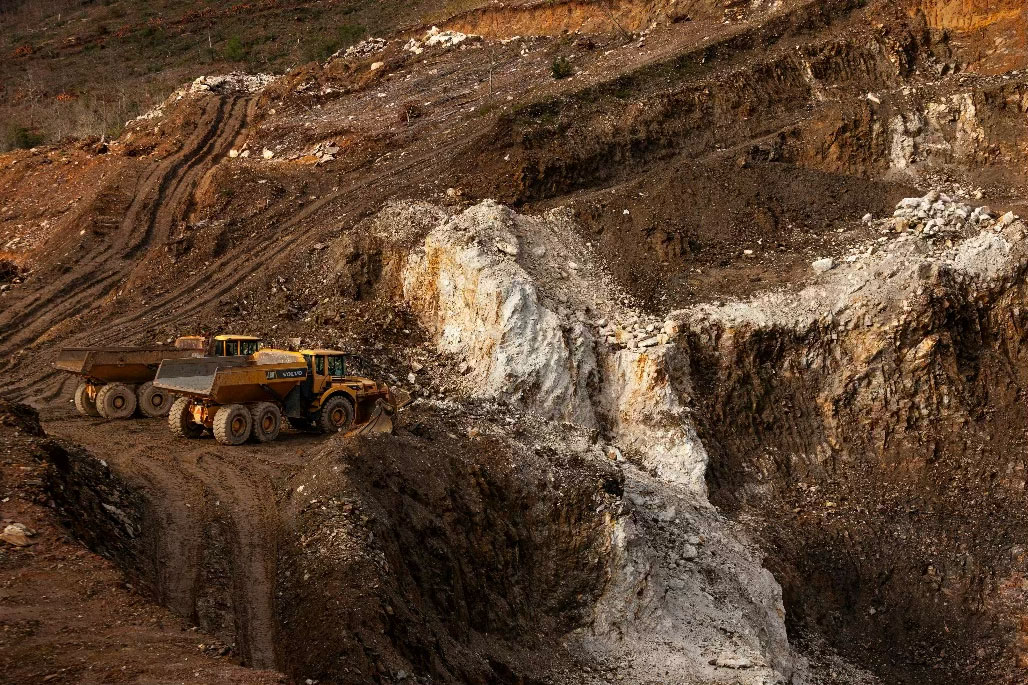
For example, in the Tibetan grasslands of western Sichuan, villagers along the Liqi River say toxic chemicals from the Ganzizhou Rongda Lithium mine first leaked into the river in 2009, killing fish and livestock. They blame the river for the deaths of hundreds of yaks in the years since [1]. A second outbreak in 2013 prompted protests and a temporary halt. When mining restarted in April 2016, the fish began dying again. In May, residents strewed dead fish across a road in Tagong and were surrounded by dozens of riot police armed with batons. The government then promised the mine would stay closed until its environmental problems were solved.Where environmental law is strong, years of litigation can slow down projects significantly. Thacker Pass in northern Nevada, which sits on the largest known lithium deposit in the United States, received federal approval in January 2021, and a rancher, conservation groups, and Native American tribes soon sued. The legal fight took two years to reach a ruling. In February 2023, U.S. District Judge Miranda Du found that the Bureau of Land Management had made a legal error in approving part of the mine plan, yet she let the project go forward [2]. The same ruling turned away, for a third time, tribes who argued the mine threatened the site of an 1865 massacre of their ancestors [3]. Weeks later, Du acknowledged that construction would “disrupt the sagebrush ecosystem within the project area” [4]. By the time the Ninth Circuit upheld the approval in July 2023, the project had spent nearly two and a half years in court [5].
Brine Extraction: Water, Environmental, and Regulatory Constraints
Brine operations avoid blasting and crushing, but conventional production pumps lithium-rich water from beneath salt flats into evaporation ponds, pitting major producers against regulators and courts over water. After a multi-year investigation, Chile’s environmental regulator found that SQM had overdrawn brine from the Salar de Atacama [6]. In December 2019, the First Environmental Court in Antofagasta sided with neighboring Indigenous communities and threw out SQM’s compliance plan, citing the precautionary principle and the “particular fragility” of the Atacama ecosystem. A $52 million environmental compliance plan wasn’t approved until 2022, sinking years and millions of dollars into legal battles [7].
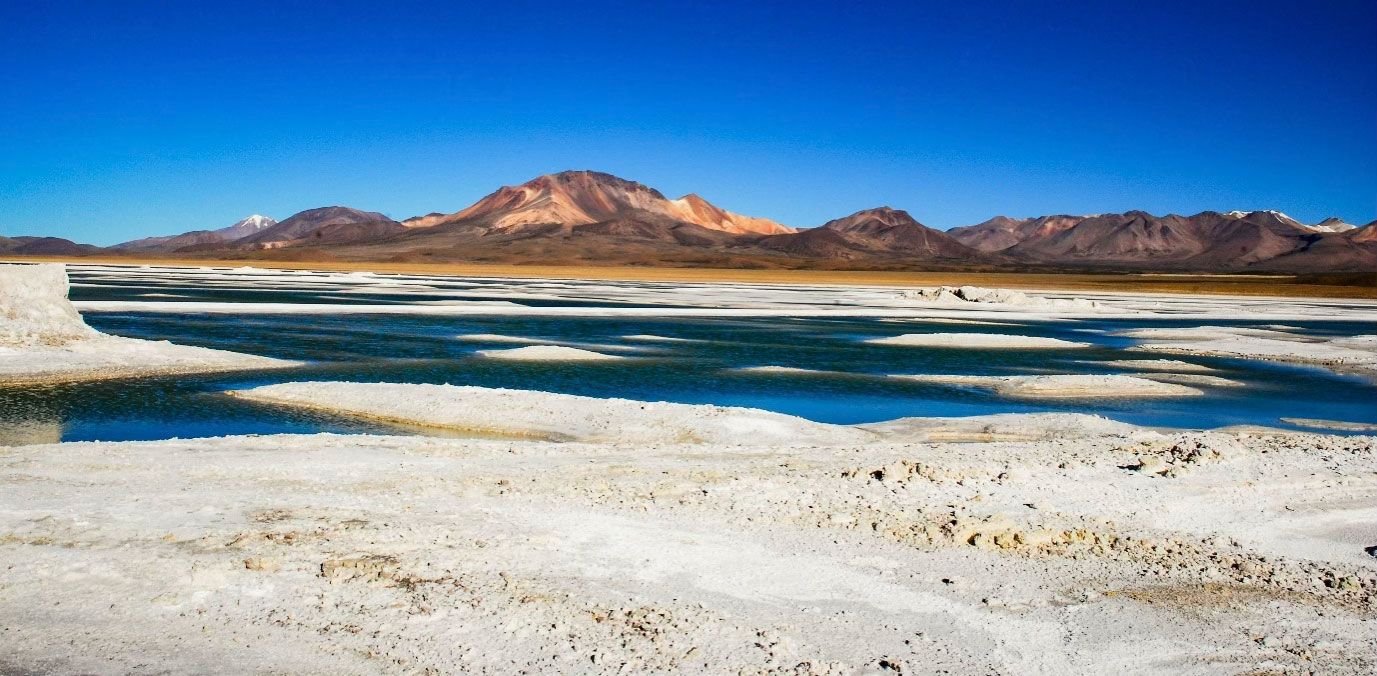
In Argentina, FMC, whose lithium business later became Livent, began producing lithium at the Salar del Hombre Muerto in 1997, and its Fénix project was authorized to dam the Trapiche River for process water [8,9]. In 2021, Román Guitián, chief of the Atacameños del Altiplano Indigenous community, sued, alleging that the province had approved projects in the basin without notifying residents or studying the environmental impact [10]. In March 2024, Catamarca’s highest court found that “the environmental damage to the Trapiche River has been confirmed”. It barred new permits in the Los Patos River–Salar del Hombre Muerto area until a cumulative impact study of every lithium project in the basin is completed.
In Bolivia, whose Salar de Uyuni holds an estimated 10 million metric tons of lithium, it’s been difficult to get started at all [11]. Under Evo Morales, president from 2006 to 2019, the state-run program was hobbled by technical and financial problems and never established lithium production of any real significance [12]. In November 2019, after weeks of protests in Potosí demanding an 11% royalty instead of 3%, the government scrapped its joint venture with Germany’s ACI Systems, which had planned to invest about $1.3 billion.
Conventional Lithium Refining: Energy, Waste, and Safety Risks
Concentrate from a mine, or concentrated brine from a pond, is still far from battery grade. Conventional spodumene refining calcines the concentrate at about 1,000 to 1,100°C, digests it in strong sulfuric acid at 200 to 250°C, and then leaches and purifies the solution in stages. The sequence is energy-intensive and leaves roughly 0.8 metric tons of acidic residue per metric ton of spodumene [13]. Every additional stage adds operational complexity, energy requirements, cost, and potential process risk. During a shutdown on November 22, 2012, at Galaxy Resources’ Jiangsu lithium carbonate plant in China, an unexpected blockage in a crystallizer trapped sodium sulfate liquid whose sudden release burst a fiberglass pipe, injuring 11 workers, two of whom later died [14,15]. Galaxy conceded that the hazard had never appeared in its designers’ safety studies. In August 2025, an acid pipe exploded at Albemarle’s La Negra lithium carbonate plant in Chile. Albemarle reported no injuries, but Chilean deputy Jaime Araya asked regulators for urgent inspections, alleging that workers had been exposed to potentially lethal danger amid substandard safety conditions and maintenance [16].
How Direct Lithium to Product® (DLP™) Enables Scalable Lithium Production
Conventional production places large, slow, site-specific assets, from evaporation ponds to stand-alone refineries, between the resource and saleable battery-grade product. Direct Lithium to Product® (DLP™), developed by IBC Advanced Technologies, Inc. (IBC) and commercialized by its subsidiary GreenLiT Pure Lithium®, is designed to bypass this intermediate infrastructure.
Using SuperLig® Molecular Recognition Technology® (MRT®), the fully automated, modular DLP™ process selectively extracts more than 99% of the lithium in a brine and converts it directly into 99.5%+ pure superior battery-grade lithium hydroxide or carbonate, achieving an overall recovery of 99% at the resource site. The output of DLP™ is a battery-grade lithium product, not an intermediate. As a result, a separate midstream refinery is unnecessary. DLP™ operates at ambient temperature and atmospheric pressure without organic solvents. It has low energy consumption (10 kWh/kg LCE) and low water intensity (10 m3/ton, recycled or returned to source). By reinjecting lithium-depleted brine, the system is designed to minimize disruption to local aquifers and surrounding communities. Because DLP™ systems are modular, capacity can be added in increments instead of being staked on a single all-or-nothing plant, and the same process can treat solutions derived from spodumene or recycled batteries.
DLP™ has been demonstrated at large pilot scale at Chile’s Salar de Maricunga, where analyses by the Universidad de Atacama confirmed 99+% lithium extraction and battery-grade lithium hydroxide with non-detectable magnetic and other impurities. Panasonic and Chori have joined SIMCO and IBC in plans for a commercial DLP™ plant there, a project sized for 22,000 metric tons of lithium hydroxide monohydrate a year, with production targeted from 2028. The Maricunga project represents an important step from pilot-scale validation toward commercial deployment, demonstrating how modular DLP™ facilities may be expanded incrementally rather than requiring a single large-scale development decision at the outset. Behind it stands more than 35 years of IBC experience in the commercial scale-up of metals processing.
When rising lithium demand is met by enlarging conventional mines, ponds, and refineries, developers may face environmental constraints, permitting delays, community concerns, water-management challenges, safety risks, and significant capital requirements. While many conventional operations are successful, these factors can complicate efforts to rapidly expand global lithium supply.
DLP™ offers a low-impact and highly scalable lithium-production pathway. Ongoing commercialization efforts aim to validate these advantages at full industrial scale.
Sources
[1] Denyer, S. December 2016. Tibetans in anguish as Chinese mines pollute their sacred grasslands. The Washington Post (republished by the Santa Fe New Mexican). Available online at: https://www.santafenewmexican.com/news/chinese-mines-pollute-sacred-tibetan-lands/article_04afb96a-009e-522d-bdc7-2046ef000df2.html
[2] Bartell Ranch LLC v. McCullough, No. 3:21-cv-00080-MMD-CLB (D. Nev. Feb. 6, 2023). Order. U.S. District Court for the District of Nevada. Available online at: https://dockets.justia.com/docket/nevada/nvdce/3:2021cv00080/148512/
[3] Sonner, S. February 2023. US judge refuses to block Nevada lithium mine construction near Oregon border. Associated Press (via KATU). Available online at: https://katu.com/news/local/us-judge-refuses-to-block-nevada-lithium-mine-construction-near-oregon-border
[4] Sonner, S. February 2023. US judge won’t block huge lithium mine on Nevada-Oregon line. Associated Press (via KATU). Available online at: https://katu.com/news/local/us-judge-wont-block-huge-lithium-mine-on-nevada-oregon-line
[5] Sonner, S. July 2023. 9th Circuit denies bid by environmentalists and tribes to block Nevada lithium mine. Associated Press (via KTVZ). Available online at: https://ktvz.com/news/2023/07/17/9th-circuit-denies-bid-by-environmentalists-and-tribes-to-block-nevada-lithium-mine/
[6] Laing, A. December 2019. Chilean lithium miner SQM dealt blow by environmental court ruling. Reuters (via MINING.COM). Available online at: https://www.mining.com/web/chilean-lithium-miner-sqm-dealt-blow-by-environmental-court-ruling/
[7] Cambero, F. August 2022. SQM gets green light on environmental plan. Reuters (via MINING.COM). Available online at: https://www.mining.com/web/chile-lithium-producer-sqm-gets-green-light-on-environmental-plan/
[8] Interamerican Association for Environmental Defense (AIDA). March 2024. Court decision stops new lithium mining projects in Argentine salt flat, sets regional precedent. Available online at: https://aida-americas.org/en/press/court-decision-stops-new-lithium-mining-projects-argentine-salt-flat-sets-regional-precedent
[9] OPSAL. March 2024. Argentina: Precautionary measure filed by Atacameños del Altiplano community stops new mining permits in Salar del Hombre Muerto and orders measurement of “cumulative impacts”. salares.org. Available online at: https://salares.org/argentina-precautionary-measure-filed-by-atacamenos-del-altiplano-community-stops-new-mining-permits-in-salar-del-hombre-muerto-and-orders-measurement-of-cumulative-impacts/
[10] Sigal, L. March 2024. Argentine court in key lithium region halts new permits over environmental concerns. Reuters (via MINING.COM). Available online at: https://www.mining.com/web/argentine-court-in-key-lithium-region-suspends-new-mining-permits-over-environmental-concerns/
[11] Hampel, C. November 2019. Decree annulled on Bolivian-German lithium deal. electrive. Available online at: https://www.electrive.com/2019/11/04/decree-annulled-on-bolivian-german-lithium-deal/
[12] Davis, J. December 2020. Bolivia’s Lithium Future: A Second Chance? Wilson Center. Available online at: https://www.wilsoncenter.org/sites/default/files/media/uploads/documents/Bolivia%27s%20Lithium%20Future_A%20Second%20Chance.pdf
[13] Jorjani, E., J. Sauvageau, D. Mrabet, and M. Rejeb. 2025. Advances in Lithium Extraction from Spodumene: Alternatives to Sulfuric Acid Digestion. Minerals 15(6): 574. Available online at: https://www.mdpi.com/2075-163X/15/6/574
[14] Galaxy reports second fatality at China plant. January 2013. Mining Weekly. Available online at: https://www.miningweekly.com/article/galaxy-reports-second-fatality-at-china-plant-2013-01-16
[15] Galaxy back on track at Jiangsu. 2013. Yahoo News Australia. Available online at: https://au.news.yahoo.com/galaxy-back-on-track-at-jiangsu-16245303.html
[16] Kavanagh, T., C. Welch, and P. Consoli. August 2025. Chilean lithium refinery hit by pipeline explosion. Argus Media. Available online at: https://www.argusmedia.com/en/news-and-insights/latest-market-news/2720363-chilean-lithium-refinery-hit-by-pipeline-explosion