

The birth of AI
Long before artificial intelligence (AI) was realized in any way, intense computing was done by ENIAC. Announced by the University of Pennsylvania on February 14, 1946, the Electronic Numerical Integrator and Computer was built under an Army contract to tackle wartime ballistics calculations. It filled a room 30 by 50 feet, weighed 30 tons, depended on 18,000 vacuum tubes, and drew 150 kilowatts of electricity through its own dedicated power lines [1]. IBM counts ENIAC as an early example of a data center, a facility housing the IT infrastructure behind applications and services [2].
In the decades that followed, computers shrank and data centers grew. In 2006 Google launched the first hyperscale data center in The Dalles, Oregon, which covers 1.3 million square feet [2].
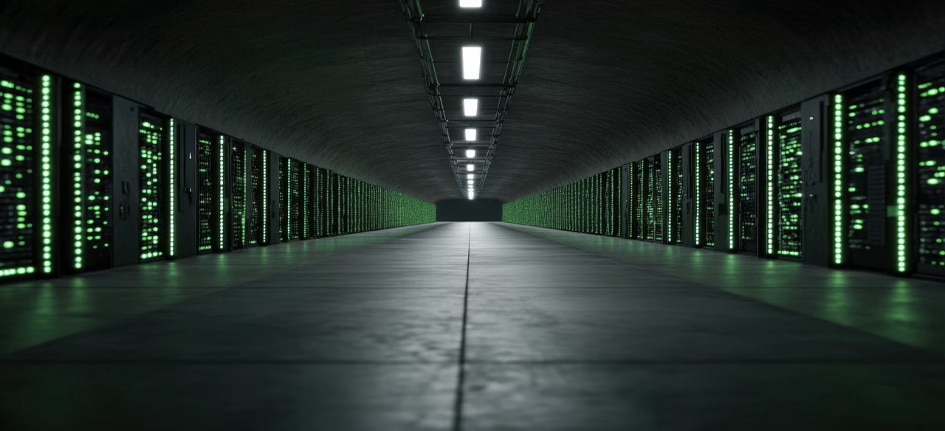
Today, the widespread use of AI is further expanding the physical size and massively increasing the resource demands of data centers. The International Energy Agency (IEA) expects electricity demand from AI-optimized data centers to more than quadruple by 2030 [3]. Just as important as electricity to their functioning are the critical minerals from which data centers are built.
America’s data center boom
In the United States, data center growth has been staggering. According to the U.S. Department of Energy (DOE), data center electricity use climbed from 58 terawatt-hours (TWh) in 2014 to 176 TWh in 2023, about 4.4% of the nation’s total, and could reach 6.7 to 12% by 2028 [4]. The IEA expects data centers to account for almost half of U.S. electricity demand growth through 2030, when the country will use more electricity processing data than manufacturing all energy-intensive goods combined, including aluminum, steel, cement, and chemicals [3]. By January 2026, U.S. spending on data center construction topped $2.4 billion per month, roughly 16 times the early-2014 level, having nearly tripled since AI chatbots took off in late 2022 [5].
A national priority
Three days after his inauguration, President Trump signed Executive Order 14179, declaring it “the policy of the United States to sustain and enhance America’s global AI dominance” [6]. America’s AI Action Plan, released in July 2025, warns that “the United States is in a race to achieve global dominance in artificial intelligence,” and that “whoever has the largest AI ecosystem will set global AI standards and reap broad economic and military benefits” [7]. Alongside the plan, Executive Order 14318 moved to accelerate federal permitting for data centers that add more than 100 megawatts of load or commit at least $500 million in capital spending [8]. As its fact sheet put it, “President Trump has made American leadership in AI a national priority” [9].
In July 2026, the White House expanded its Ratepayer Protection Pledge, under which large data center operators, not ratepayers, fund new generation and grid infrastructure to “ensure the growth of data centers powering America’s AI dominance will not raise electricity bills” [10]. Minerals policy has kept pace. In November 2025, the U.S. Geological Survey (USGS) expanded the nation’s List of Critical Minerals to 60, adding copper, silver, and silicon, all three found throughout data centers [11,12].
The demand for critical minerals
At the center of a data center are its microchips, which the USGS calls the “brains”. They require a host of critical minerals: silicon, gallium, germanium, arsenic, indium, fluorspar, tantalum, palladium, and platinum [12]. Gallium forms the gallium nitride and gallium arsenide semiconductors used in high-speed processors and telecom equipment, and germanium is used in fiber optics; both are vital for semiconductors and optical transceivers [13].
The server boards and circuitry around those chips need critical metals that conduct electricity efficiently and resist corrosion: copper, silver, gold, tin, tantalum, palladium, and platinum. Tin is a key element in solder, tantalum and palladium go into the capacitors that keep power steady, and gold and silver line the connectors that carry high-speed signals [14]. Heat sinks of aluminum and copper draw heat away from sensitive electronics. In hard disk drives, neodymium-iron-boron magnets made with praseodymium and dysprosium let drives precisely read and write data, while platinum and ruthenium coat the drives and barium goes into ferrite magnets [15].
A huge amount of the critical minerals they need to run sits outside the servers. Each megawatt of capacity embeds around 60 to 75 tons of minerals, mainly in power and cooling systems. Microsoft’s 80-megawatt data center in Chicago alone used about 2,100 tons of copper [14]. By 2030, data centers could require more than half a million metric tons of copper and 75,000 tons of silicon each year, and account for more than a tenth of all gallium demand [16].
AI chips switch on and off so quickly that they create serious power-quality problems, and at today’s power levels a traditional uninterruptible power supply can no longer cope. Battery energy storage systems are being used instead. This AI-linked storage demand could reach 300 gigawatt-hours by 2030, with lithium iron phosphate as a key ingredient [17]. More broadly, lithium, nickel, cobalt, manganese, and graphite are crucial to battery performance, longevity, and energy density [18].
U.S. import reliance
Most of the critical minerals used to build the various components of data centers and the energy infrastructure they rely on is imported. According to the USGS, the United States relies on imports for 100% of its gallium, germanium, indium, arsenic, fluorspar, and tantalum, 85% of its platinum, 80% of its rare earths, 73% of its tin, 64% of its silver, and 45% of its copper [12]. In 2025, the country was entirely import-reliant for 16 critical minerals, and China was a top producer of at least half of them [19]. China also controls 80 to 90% of global refining of silicon, gallium, and rare earths [16]. In December 2024, it banned exports of gallium, germanium, and antimony to the United States, and its November 2025 suspension of that ban lasts only until November 27, 2026 [20].
 Recovering, refining, and recycling critical minerals with Molecular Recognition Technology® (MRT™)
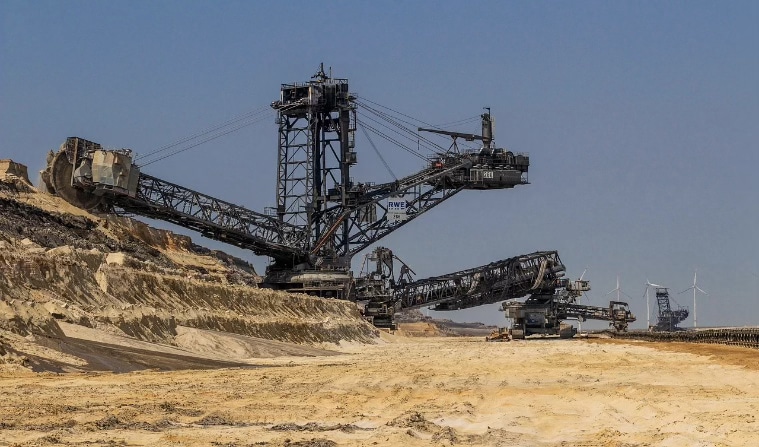
Many of these critical minerals do not exist in the US in great enough amounts to supply the growing demand from data centers, and other minerals are at a worldwide deficit in comparison to demand. Relying on mining will not be enough to feed growing demand.
Instead, it will take more effective ways to separate and purify them from ores, brines, process streams, and discarded electronics.
IBC Advanced Technologies, Inc. has a proven track record in recycling and refining critical minerals from across the periodic table. Molecular Recognition Technology® (MRT™) is built on host-guest chemistry: IBC’s SuperLig® products covalently attach host molecules designed to recognize and selectively interact with a specific guest species to a solid support. Packed into columns, they achieve first-pass recoveries above 99% and concentrate metals from milligrams to grams per liter, without organic solvents and at ambient conditions.
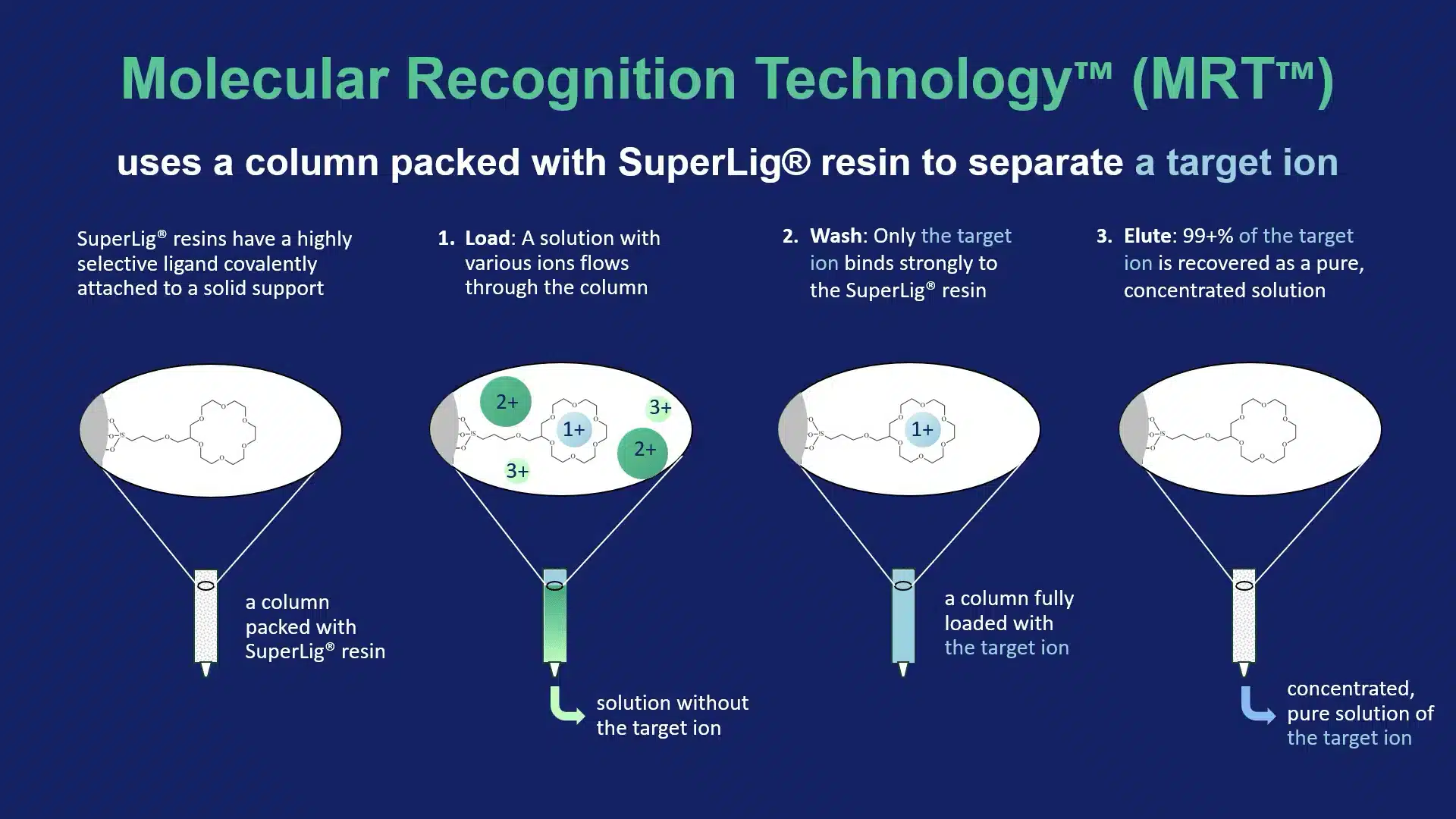
For the copper that wires every data center, purity is essential and MRT™ has been shown to remove both bismuth and antimony, two of the most common and deleterious impurities, from copper electrolyte. Importantly, bismuth and antimony are valuable critical minerals in their own right, and MRT™ recovers them as pure by-products from copper electrolyte. In rare earth processing, MRT™ has been demonstrated to separate every individual rare earth element except promethium, at over 99% recovery and over 99.9% purity. In e-waste processing, MRT™ has delivered copper, nickel, iron, tin, silver, palladium, and platinum at over 99% purity.
For lithium, IBC’s Direct Lithium to Product® (DLP™) process uses a SuperLig® resin that recognizes lithium by its shape and molecular characteristics, not just its charge, and IBC has proven 99.1% total recovery of lithium from the brine source to production of superior battery-grade lithium hydroxide monohydrate at 99.9+% purity. With cobalt, SuperLig® resins strip cadmium and copper from cobalt electrolyte to below 0.1 mg/L with no cobalt losses, producing battery-grade cobalt. With recycling rates under 1% for lithium and rare earths, the room for recovery is enormous [28]. Although the “urban mine” of discarded electronics is vast, very little of it is ever recycled. Every day, a huge quantity of critical minerals are discarded as a part of electronic gadgets and recovering them is crucial to securing independent access to these resources and to insulating the United States from geopolitical instability, both now and in the future. IBC is perfectly poised to spearhead this effort. A leader in its field, IBC pairs decades of expertise and reliability with a high selectivity that sets it completely apart. With these strengths, IBC can supply data centers with the minerals they need for both their energy infrastructure and their critical hardware as well as recycle spent components. Highly selective separation with MRT™ offers a clean, economical, and reliable way to recycle and refine copper, rare earths, lithium, cobalt, and precious metals from American ores, brines, and electronic waste, and to purify them to the standard data centers demand.
Sources:
[1] Penn Engineering (n.d.). Celebrating Penn Engineering history: ENIAC. University of Pennsylvania School of Engineering and Applied Science. Available online at: https://www.engineering.upenn.edu/about/history-heritage/eniac/
[2] Susnjara, S. and Smalley, I. (2024). What is a data center? IBM Think. Available online at: https://www.ibm.com/think/topics/data-centers [Accessed 14 Oct. 2026].
[3] International Energy Agency (2025). AI is set to drive surging electricity demand from data centres while offering the potential to transform how the energy sector works. IEA press release, 10 April 2025. Available online at: https://www.iea.org/news/ai-is-set-to-drive-surging-electricity-demand-from-data-centres-while-offering-the-potential-to-transform-how-the-energy-sector-works [Accessed 14 Oct. 2026].
[4] U.S. Department of Energy (2024). DOE releases new report evaluating increase in electricity demand from data centers. 20 December 2024. Available online at: https://www.energy.gov/articles/doe-releases-new-report-evaluating-increase-electricity-demand-data-centers [Accessed 14 Oct. 2026].
[5] Samborska, V. (2026). How much is the US spending on building data centers? Our World in Data, 9 April 2026. Available online at: https://ourworldindata.org/how-much-is-the-us-spending-on-building-data-centers [Accessed 14 Oct. 2026].
[6] Trump, D.J. (2025). Executive Order 14179: Removing Barriers to American Leadership in Artificial Intelligence. 23 January 2025. The American Presidency Project, University of California, Santa Barbara. Available online at: https://www.presidency.ucsb.edu/node/376009 [Accessed 14 Oct. 2026].
[7] The White House (2025). Winning the Race: America’s AI Action Plan. July 2025. Available online at: https://www.whitehouse.gov/wp-content/uploads/2025/07/Americas-AI-Action-Plan.pdf [Accessed 14 Oct. 2026].
[8] Trump, D.J. (2025). Accelerating Federal Permitting of Data Center Infrastructure (Executive Order 14318). 23 July 2025. The White House. Available online at: https://www.whitehouse.gov/presidential-actions/2025/07/accelerating-federal-permitting-of-data-center-infrastructure/ [Accessed 14 Oct. 2026].
[9] The White House (2025). Fact sheet: President Donald J. Trump accelerates federal permitting of data center infrastructure. 23 July 2025. Available online at: https://www.whitehouse.gov/fact-sheets/2025/07/fact-sheet-president-donald-j-trump-accelerates-federal-permitting-of-data-center-infrastructure/ [Accessed 14 Oct. 2026].
[10] The White House (2026). President Trump’s Ratepayer Protection Pledge secures American AI dominance, protects consumers. 23 July 2026. Available online at: https://www.whitehouse.gov/releases/2026/07/president-trumps-ratepayer-protection-pledge-secures-american-ai-dominance-protects-consumers/ [Accessed 14 Oct. 2026].
[11] U.S. Geological Survey (2025). Interior Department releases final 2025 List of Critical Minerals. November 2025. Available online at: https://www.usgs.gov/news/science-snippet/interior-department-releases-final-2025-list-critical-minerals [Accessed 14 Oct. 2026].
[12] U.S. Geological Survey (2025). Key minerals in data centers infographic. Based on USGS Mineral Commodity Summaries 2025. Available online at: https://www.usgs.gov/media/images/key-minerals-data-centers-infographic [Accessed 14 Oct. 2026].
[13] SFA (Oxford) (n.d.). Critical minerals in servers and data storage. SFA (Oxford) Ltd. Available online at: https://www.sfa-oxford.com/knowledge-and-insights/critical-minerals-in-low-carbon-and-future-technologies/critical-minerals-in-electronics/critical-minerals-in-servers-and-data-storage/ [Accessed 14 Oct. 2026].
[14] Allgood, K. and Hulak, I. (2025). Metals at scale for AI at scale: securing the data centre materials backbone. World Economic Forum, 10 December 2025. Available online at: https://www.weforum.org/stories/manufacturing-and-value-chains/securing-data-centre-materials/ [Accessed 14 Oct. 2026].
[15] Western Digital (2025). At-scale, hard disk drive rare earth material capture program successfully launched in the United States. Press release, 17 April 2025. Available online at: https://www.westerndigital.com/company/newsroom/press-releases/2025/2025-04-17-at-scale-hard-disk-drive-rare-earth-material-capture-program-launched [Accessed 14 Oct. 2026].
[16] van de Graaf, T. (2025). Inside the AI-led resource race. Finance & Development, International Monetary Fund, December 2025. Available online at: https://www.imf.org/en/publications/fandd/issues/2025/12/inside-the-ai-led-resource-race-thijs-van-de-graaf [Accessed 14 Oct. 2026].
[17] Shah, V. (2026). Medium-voltage UPS at AI data centers a growing source of BESS LFP cell demand. Fastmarkets, 28 July 2026. Available online at: https://www.fastmarkets.com/insights/medium-voltage-ups-at-ai-data-centers-a-growing-source-of-bess-lfp-cell-demand/ [Accessed 14 Oct. 2026].
[18] International Energy Agency (2022). The role of critical minerals in clean energy transitions (revised version, March 2022). IEA, Paris. Available online at: https://www.iea.org/reports/the-role-of-critical-minerals-in-clean-energy-transitions [Accessed 14 Oct. 2026].
[19] Northey, H. (2026). US increasingly dependent on importing critical minerals. E&E News, 9 February 2026. Available online at: https://www.eenews.net/articles/us-increasingly-dependent-on-importing-critical-minerals/ [Accessed 14 Oct. 2026].
[20] Yao, K., & Jackson, L. (2025, November 10). China halts ban on gallium, germanium, antimony exports to US, but controls remain. Reuters. Available online at: https://www.reuters.com/world/china/china-suspends-ban-exports-gallium-germanium-antimony-us-2025-11-09/