

The World’s Critical Minerals Are Getting Harder to Reach and Process
Every year, the critical minerals that power modern life become harder to extract and purify. Primary ore grades decline. Mines dig deeper. More rock must be processed for less metal. Chemically complex brines and tailings must be treated to pull out small amounts of critical minerals. Impurities increase as concentrations fall. Critical minerals often appear only as trace by‑products, measured in parts per million. Rare earth elements are locked together in chemically stubborn matrices.
At the same time, secondary and recycling streams are becoming more complex:
- Electronic scrap contains dozens of metals in unpredictable ratios.
- Lithium‑ion batteries blend cobalt, nickel, manganese, lithium, aluminum, copper, and graphite.
- Catalytic converters contain platinum group metals mixed with cerium, zirconium, and base metals.
- Medical radioisotope production depends on extracting trace target radioisotopes from chemically complex blends of nuclear material that must be processed rapidly at exceptionally high purities with minimal waste generation and small space requirements.
The world’s critical minerals feedstocks are becoming more dilute, more complex, and more difficult to separate.
Yet classical separation technologies such as ion exchange, solvent extraction and precipitation have seen very limited innovation. Their core chemistry remains anchored to ineffectual, single-parameter separation discriminators such as ionic charge or pH changes. They respond to rising complexity the only way they can: by increasing flow sheet complexity.
Add a stage to fix a purity problem. Add a reagent to correct a side reaction. Add a tank to hold the waste the last step created. Add a polishing step to remove the impurity introduced by the previous polishing step.
Flowsheets expand. Footprints grow. Reagent consumption increases. Waste generation accelerates. Residence times lengthen, locking valuable metals into inventory. Inefficiency becomes normal, not because engineers want it, but because conventional technologies cannot discriminate at the level modern feedstocks require.
Across the critical minerals landscape, the trend is clear: More complexity in the feed equals more complexity in the flowsheet. Unless the fundamental chemistry changes.
MRT™: A Different Path
MRT™ takes the opposite approach.
It delivers power in fundamental separations chemistry and simplicity in engineering, using four components designed from the beginning to work in unison. The result is an integrated separation system that simultaneously achieves what classical separation technologies cannot:
- high selectivity
- high purity
- high recovery
- minimal waste generation
- low energy, water and reagent consumption
- compact, modular operation
This is separation chemistry designed for the world we actually live in with dilute feedstocks, complex matrices, and high purity requirements.
MRT™ is Greater than the Sum of Its Parts
Four Components of MRT™: Each One Designed, Engineered and Essential
The component‑by‑component description of MRT™ illustrates how elegance in chemistry drives simplified process engineering.
1. The Ligand: Precision Molecular Recognition
IBC Advanced Technologies’ “host” molecules are designed to bind a particular “guest” ion with extraordinary selectivity [1]. These are novel ligands, not generic chelators. They are designed to:
- bind under complex industrial feed conditions
- discriminate based on multiple variables simultaneously, including size, geometry, electron configuration, and charge
- release with mild reagents compatible with downstream product manufacturing
The chemistry begins with host–guest recognition, wherein a host molecule can be built to recognize and selectively interact with a specific guest species. The field earned Nobel Prizes in Chemistry in 1987, awarded to Donald Cram, Jean-Marie Lehn and Charles Pedersen “for their development and use of molecules with structure-specific interactions of high selectivity” [2], and again in 2016 [3]. Cram’s principle of preorganization explains that the more thoroughly host and guest are organized for binding before they meet, the more stable the resulting complex [4]. Pedersen’s serendipitous discovery of macrocyclic polyethers and of their selective complexation of alkali metal cations inspired IBC’s founders to pursue thermodynamic characterization of a wide range of novel predesigned host molecules for the selective separation of metal ions from complex industrial matrices [5]. This work led to Dr. Reed M. Izatt and Dr. Jerald S. Bradshaw receiving the American Chemical Society National Award in Separations Science and Technology in 1996 [6].
2.The Solid Support: Engineered for High Performance
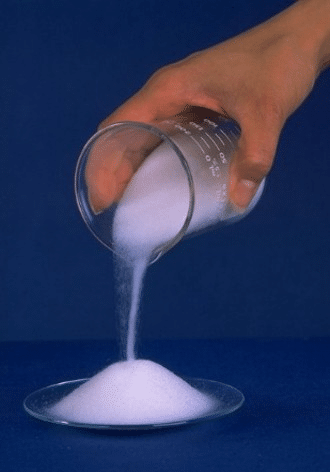
Silica or polymer beads (~0.5 mm) are engineered for:
- high surface area
- optimized pore structure
- fast mass transfer
- mechanical stability
The ligand is covalently attached to the solid support, ensuring:
- stability
- reusability
- zero ligand migration
- no organic solvents
- no contamination of product streams
The step that converted molecular recognition into an industrial technology was covalently bonding a macrocycle to a solid substrate, while retaining its complexation properties, demonstrated by Izatt, Bruening, Krakowiak, Bradshaw, Christensen and colleagues in Analytical Chemistry in 1988, which made reuse of the valuable macrocycle practical [7], leading to the economic viability of MRT™. Because the ligand stays on the bead, no organic solvents are required, and their associated cost, flammability, environmental and worker-safety burdens disappear from the flowsheet [8]. This removal of hazardous chemicals eliminates major environmental and worker safety liabilities from the plant floor. Further, because the ligand does not migrate, it does not contaminate the product, which is a recurring failure mode in conventional processes, which frequently exchange one contaminant for another [8].
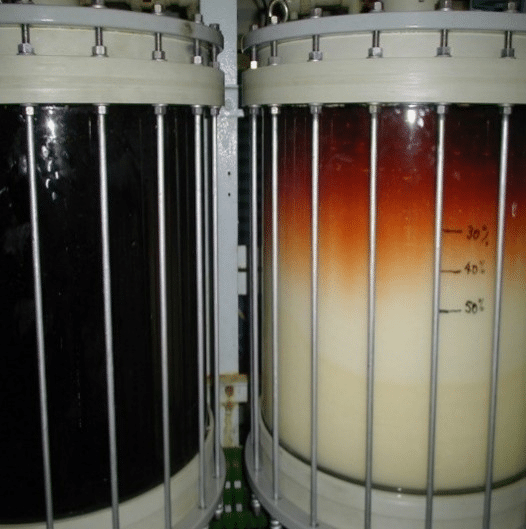
3.The Column: Sharp, Fast, Predictable Separations
Packed‑bed columns are designed to maximize kinetic mass transfer, ensuring:
- predictable binding
- rapid loading
- rapid release (elution)
- minimal diffusion limitations
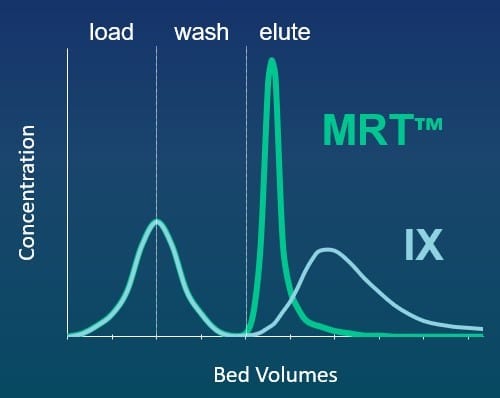
Elution volumes are typically 1–2 bed volumes, producing pure, concentrated eluates. The concentration of the target ion is often increased from mg/L in the feed to g/L in the product.
4.The Automated MRT™ System: Engineering Built Around Chemistry
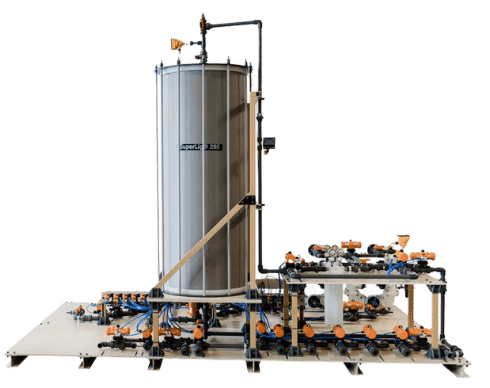
Skid‑mounted MRT™ systems integrate:
- ambient‑condition operation
- simple reagents
- compact footprint
- automated cycling
- minimal waste generation
Because MRT™ requires modest quantities of SuperLig® MRT™ resin, installations are small enough for on‑site deployment. This eliminates transport of metal‑bearing waste and reduces footprint, residence time, and working capital.
All Together, Now
High first‑pass recovery above 99% results from ligand design, thermodynamics, kinetics, and column engineering [8]. Minimal waste generation follows from selectivity and small elution volumes [9]. Lower capital and operating costs, smaller footprint, and reduced metal financing costs arise from the entire MRT™ architecture working together [10].
Importantly, MRT™ is not a single molecule. It is a design method that is adaptable, reusable, and scalable.
What MRT™ Achieves That Classical Technologies Cannot
The assembled MRT™ system does more than any single component can do alone.
- It selectively extracts palladium, platinum and rhodium as individual metals from catalytic converter recycling streams at >99.95% purities.
- It selectively recovers Cu, Ni, Fe, Sn, Ag, Pd and Pt as individual metals from e-waste recycling streams at >99% purities with minimal waste generation.
- It purifies medical isotopes with unmatched precision. Radioisotopes such as Ac‑225 and Pb‑212, which are used for targeted alpha therapy, are purified with MRT™ for subsequent radiopharmaceutical manufacturing. To accelerate this medical breakthrough, IBC launched its specialized subsidiary, RadSep, Inc., bringing rapid, single-step isotope separations into pharmaceutical spaces.
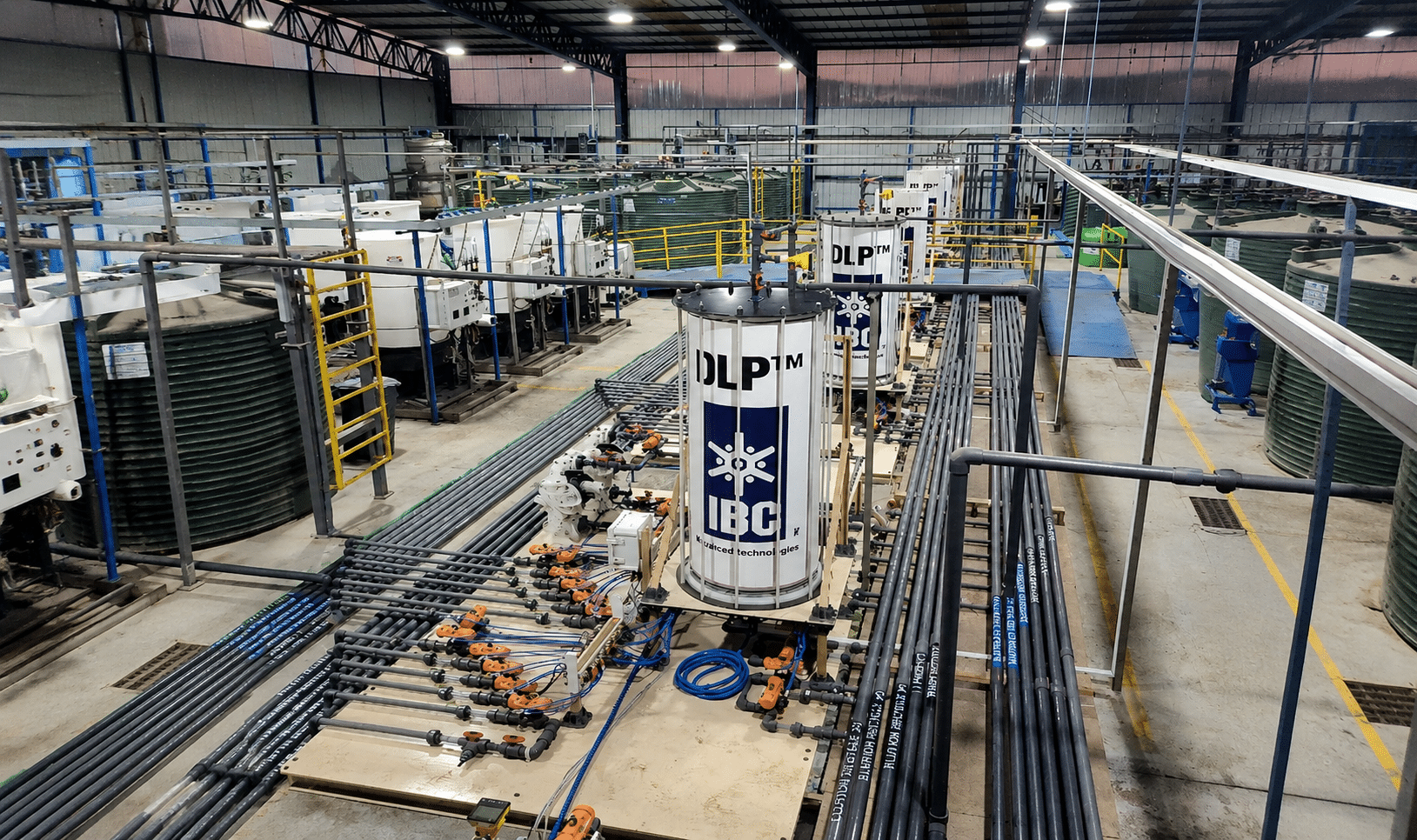
- It is used in the Direct Lithium to Product® (DLP™) process to achieve 99% lithium recovery from brines and enable direct production of superior battery-grade (99.9+%) lithium hydroxide monohydrate. The award winning DLP™ process is spearheaded by IBC’s subsidiary GreenLiT Pure Lithium, Inc.
- It cleanly separates iridium from platinum‑group metal mixtures, simplifying flowsheets, reducing waste, and enabling circular‑economy recovery from secondary feedstocks.
- It removes toxic metals from food and water systems creating a cleaner, healthier environment.
These outcomes arise from the synergistic operation of all four MRT™ components. Reed Izatt and colleagues have argued in Chemical Society Reviews that metal sustainability in a high-tech society will depend on the improvement in selective separation, particularly for recovery from dilute feedstocks [11]. While the chemistry behind molecular recognition is necessary, it alone is not sufficient to provide metal sustainability on an industrial scale. The entire MRT™ system gives results no competitor can match because of each unique part working in unison.
Why Critical Minerals Sustainability Matters
Global demand for critical minerals is accelerating. At the same time, feedstocks are becoming more dilute and more complex. Sustainable separation is no longer optional, it is essential.
MRT™ enables:
- single-step recovery from dilute feedstocks
- high‑purity product streams
- minimal waste generation
- reduced footprint and energy use
- circular‑economy recycling
- secure supply chains for high‑tech industries
This is green chemistry and green engineering working together.
IBC Advanced Technologies: Responsible by Design
IBC continues to expand MRT™ applications across the periodic table to support the processing of critical minerals and responsible disposition of environmentally hazardous elements. We deliver green chemistry and green engineering solutions that make sustainability practical, profitable, and scalable [12]. Whether you are recovering high‑value metals, producing next‑generation radiopharmaceuticals, or designing circular‑economy flowsheets, IBC is ready to help you implement Molecular Recognition Technology® to achieve maximum recovery, maximum purity, and minimal waste.
Sources
[1] IBC Advanced Technologies. What are Molecular Recognition and Molecular Recognition Technology®. https://ibcmrt.com/molecular-recognition-technologytm-mrttm/what-are-molecular-recognition-and-molecular-recognition-technology/
[2] The Nobel Prize in Chemistry 1987 — Press Release. NobelPrize.org. https://www.nobelprize.org/prizes/chemistry/1987/press-release/
[3] The Nobel Prize in Chemistry 2016. NobelPrize.org. https://www.nobelprize.org/prizes/chemistry/2016/summary/
[4] Cram DJ. The Design of Molecular Hosts, Guests, and Their Complexes. Nobel Lecture, 1987. https://www.nobelprize.org/uploads/2018/06/cram-lecture.pdf
[5] Izatt, RM. Charles J. Pedersen: Innovator in macrocyclic chemistry and co-recipient of the 1987 Nobel Prize in chemistry, Chem. Soc. Rev. (2007) 36 (2): 143–147. https://doi.org/10.1039/b613448n
[6] Chemical & Engineering News Archive (1996) 74 (4): 56–60. https://doi.org/10.1021/cen-v074n004.p056
[7] Izatt RM, Bruening RL, Bruening ML, Tarbet BJ, Krakowiak KE, Bradshaw JS, Christensen JJ. Removal and separation of metal ions from aqueous solutions using a silica-gel-bonded macrocycle system. Analytical Chemistry. 1988;60(17):1825–1826. https://pubs.acs.org/doi/10.1021/ac00168a035
[8] IBC Advanced Technologies. Highly Selective Separations: SuperLig®. https://ibcmrt.com/products-processes-and-services/highly-selective-separations-superlig/
[9] IBC Advanced Technologies. Positive ESG Impact: Green Technology, Circular Economy, Sustainability, Favorable Economics. https://ibcmrt.com/molecular-recognition-technologytm-mrttm/positive-esg-impact-green-technology-circular-economy-sustainability-favorable-economics/
[10] IBC Advanced Technologies. Highly Selective Separations. https://ibcmrt.com/molecular-recognition-technologytm-mrttm/highly-selective-separations/
[11] Izatt RM, Izatt SR, Bruening RL, Izatt NE, Moyer BA. Challenges to achievement of metal sustainability in our high-tech society. Chemical Society Reviews. 2014;43(8):2451–2475. https://pubs.rsc.org/en/content/articlelanding/2014/CS/C3CS60440C
[12] Izatt RM, Izatt SR, Izatt NE, Krakowiak KE, Bruening RL, Navarro L. Industrial applications of molecular recognition technology to separations of platinum group metals and selective removal of metal impurities from process streams. Green Chemistry. 2015;17:2236–2245. https://pubs.rsc.org/en/content/articlelanding/2015/gc/c4gc02188f