

How Irresponsible Mining Can Lead to Disaster
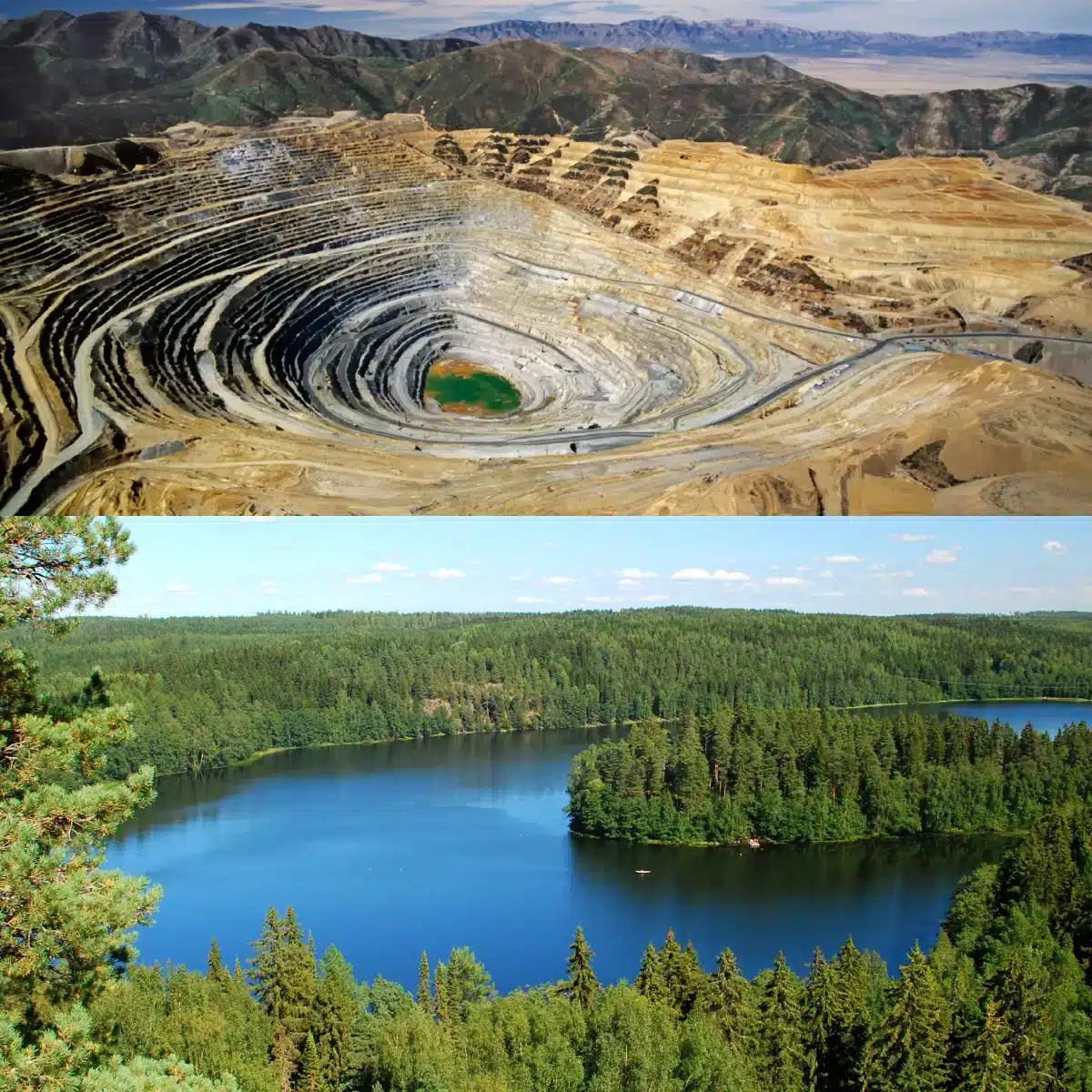
On a late-November day in 2016, a flock of snow geese migrating south set down to rest on a lake in Butte, Montana. From a distance the water looked inviting; a still, emerald-green expanse ringed by terraced rock. Within days, several thousand of the birds were dead. By the time the count was finished, an estimated 4,000 had died from a single stop [1]. The color that drew them in came from dissolved metal, and the water beneath it was roughly as acidic as battery acid.
The lake is the Berkeley Pit, and it was never meant to be a lake at all.
Chemistry and engineering quietly underpin most of what we use: consumer electronics, medicine, and the infrastructure we move through every day. All of it is conceptualized and designed by chemists and engineers. How those people think about their work, and what obligations they believe they carry to design responsibly, has an outsized effect on the environment and on human health. Where that responsibility is taken seriously, we tend not to notice. Where it is absent, the consequences are disastrous and long-lived. Nowhere is that clearer than in the mining industry.
The Berkeley Pit began in 1955 as an open-pit copper mine operated by the Anaconda Copper Mining Company, on a hill so rich in ore that Butte had long called itself “the richest hill on earth.” Over the next twenty-seven years the mine yielded roughly a billion tons of material, including silver and gold alongside the copper. By the time it stopped, the pit was nearly 1,800 feet deep and spanned about a mile and a half by a mile across [2].
Throughout its working life, pumps ran continuously to keep groundwater out of the open pit and the maze of tunnels beneath it. In 1982, with copper prices low, the operator suspended mining and shut the pumps off. Water returned almost immediately. As it seeped through the exposed rock and old workings, dissolved oxygen oxidized the minerals left behind, generating sulfuric acid, a process known as acid mine drainage. The acid, in turn, leached metals out of the surrounding stone: copper, arsenic, cadmium, cobalt, iron, manganese, and zinc all went into solution [3].
Today the pit holds more than 40 billion gallons of water sitting at a pH around 2.5, acidic enough to corrode metal. It is a terminal sink with contaminated groundwater flowing in and nothing flowing out. Thus, the water has to be pumped and treated essentially in perpetuity to keep it from rising past a protective level and into Butte’s drinking-water supply [3]. Added to the Superfund register in 1983, the pit anchors what is now among the largest and most expensive cleanup sites in the United States [2].
None of this was designed with responsibility in mind. The mine was built to pull copper out of the ground as quickly and cheaply as possible. Then, at the end of its life, poor design and worse implementation left behind an ecological disaster zone, one that remains, and must be actively managed, today.
Seeking Sustainable Mining Solutions
Mining pure elements is exceedingly rare, and for some valuable metals, such as the platinum group metals, virtually impossible. Instead, ore arrives as a mixture of target metals and rock that must be processed and purified until the metals can be separated and purified. The traditional methods for doing this, solvent extraction (SX), precipitation and ion exchange (IX), are energy intensive and depend on large volumes of organic solvents and hazardous chemicals which are discarded after use, often with significant environmental consequences.
Mining is only one way to obtain metals; recycling is another. But recovering metals from recycled material leans on the same SX, precipitation and IX chemistry, with the same toxic inputs and the same energy demands. A technology implemented with responsible design in mind needs to be used instead. So, what does better design look like?
Implementing Green Chemistry and Green Engineering Principles with Molecular Recognition Technology® (MRT™)
It looks like two separate but closely related sets of principles. Green chemistry, articulated by Anastas and Warner in 1998, seeks to reduce or eliminate the use and generation of hazardous substances at the molecular scale with 12 principles [4].
|
Green Chemistry Principle |
How IBC’s MRT™ Complies |
Real World Application |
|
1. Prevention |
Operates in a closed system of fixed bed columns with zero emissions. High first-pass recovery rates prevent secondary stream processing and waste generation. |
|
|
2. Atom Economy |
Highly specific ligands bind to targeted metal ions. This maximizes reactant-to-product efficiency. |
|
|
3. Less Hazardous Syntheses |
Avoids producing highly toxic chemical byproducts during the metal isolation phase. |
|
|
4. Designing Safer Chemicals |
Solid-phase SuperLig® resins are non-toxic and highly stable. Closed column architecture minimizes worker exposure to process chemicals. Eluents and washes are common acids, salts and water. |
|
|
5. Safer Solvents & Auxiliaries |
Features a total non-use of organic solvents. Washes and elutions consist of low-cost, simple reagents compatible with overall refinery operations. |
|
|
6. Design for Energy Efficiency |
Reactions operate at ambient temperatures and pressures, vastly reducing the carbon footprint. |
|
|
7. Use of Renewable Feedstocks |
Extracts critical metals from end-of-life catalytic converters, electronics, medical devices, and other spent materials and low-grade resources to enable a circular economy. |
|
|
8. Reduce Derivatives |
Uncomplicated single-pass flowsheets bypass the need for intermediate chemical blocking or structural protections. |
|
|
9. Catalysis |
SuperLig® resins remain unconsumed and fully reusable over hundreds to thousands of cycles. |
|
|
10. Design for Degradation |
Effluent rinse solutions are designed to be completely compatible with harmless environmental neutralizing processes. |
|
|
11. Real-Time Pollution Prevention |
Automated, skid-mounted column architecture allows real-time operational monitoring to prevent trace metal excursions. |
|
|
12. Inherently Safer Chemistry |
Eliminates volatile organic solvents, mitigating refinery risks of industrial fires and explosions. Use of simple washes and elutions (water, acids, salts) eliminates downstream liabilities. Operation in a closed system minimizes worker exposure to process chemicals. |
Green engineering, set out by Anastas and Zimmerman in 2003, extends that same logic to the process and systems scale, governing how reactions are scaled up, integrated, and operated inside industrial facilities, laid out with 12 principles [5,6].
|
Green Engineering Principle |
How IBC’s MRT™ Complies |
Example |
|
1. Inherent Rather Than Circumstantial |
Materials inside the MRT™ system are inherently non-hazardous to ensure process safety. |
|
|
2. Prevention Instead of Treatment |
MRT™ systems isolate pure elements on the first pass, preventing the creation of refinery tailings and waste streams. |
|
|
3. Design for Separation |
Replaces messy multi-stage solvent extraction, precipitation and ion exchange circuits with clean, highly efficient solid-phase MRT™ extraction columns in a closed system. |
|
|
4. Maximize Efficiency |
Flowsheets minimize spatial requirements and speed up processing times, reducing capital and space overhead. |
|
|
5. Output-Pulled vs. Input-Pushed |
Elution happens precisely based on product demand via targeted, simple chemical eluants, optimizing consumption ratios. |
|
|
6. Conserve Complexity |
Pre-designed MRT™ ligands covalently bound to solid supports (SuperLig® resins) are preserved and cycled, protecting the engineering investment. MRT™ systems are automated, skid-mounted and modular to allow flexible, compact operations directly at the site of resource generation. |
|
|
7. Durability Rather Than Immortality |
SuperLig® resins are engineered for extensive industrial lifespans spanning hundreds to thousands of cycles. MRT™ processes are fully automatable, maximizing efficiency. |
|
|
8. Meet Need, Minimize Excess |
Skid-mounted modular units are sized for the mine’s or facility’s specific output capacity, preventing oversized design flaws. |
|
|
9. Minimize Material Diversity |
Utilizes single-pass column configurations with high target selectivity, avoiding complex multi-component separation arrays. |
|
|
10. Integrate Material & Energy Flows |
Integrates local water loops and operates at ambient room temperatures to link with low-grade waste heat loops. Modular skids deploy directly next to waste streams without the energy costs of long-distance transportation. |
|
|
11. Design for Commercial “Afterlife” |
Reclaims original target materials from scrap to loop back into commerce. SuperLig® resins generate low waste volumes and dispose safely as stable, non-hazardous solids. MRT™ systems are modular and easily repurposed. |
|
|
12. Renewable Rather Than Depleting |
Captures critical minerals from spent catalytic converters, electronic scrap, medical devices and other end-of-life or low-grade resources, removing reliance on depleting raw ore mining. |
Molecular Recognition Technology® (MRT™), commercialized by IBC Advanced Technologies, Inc., as the SuperLig® family of products, is a solid-phase metal-separation platform that satisfies both frameworks.
At its heart is an idea borrowed from the way biological molecules recognize one another. Each SuperLig® resin consists of a ligand (a molecule engineered to bind one particular metal species and ignore everything around it) chemically tethered to a solid support such as silica gel. When packed into a fixed-bed column, these SuperLig® resins can be used to repeatedly extract a target metal ion from a solution. The feed solution, however acidic or crowded with competing ions, is pumped through, the ligand binds only its target, and the rest passes on to the raffinate. The column is then washed, and the captured metal is stripped off with a small volume of a simple eluent, yielding a concentrated, high-purity solution of a single metal. A final wash readies the column for the next cycle. The whole sequence is automated, skid-mounted, and carried out at room temperature [7].
Almost every advantage of MRT™ follows from its selectivity. Because each SuperLig® resin captures its target in a single pass with very high first-pass recovery, the process isolates pure metal at the outset rather than generating side streams to reprocess later. That is green chemistry’s first and most important principle, prevention: it is better to avoid waste than to clean it up afterward [4]. At the scale of the plant, that same selectivity is green engineering’s design for separation, which asks that separation be built to minimize energy and materials: a single selective step stands in for the multi-stage SX, precipitation, and IX circuits that conventional hydrometallurgy strings together [5,7].
The sharpest contrast with conventional refining is the chemistry MRT™ does not use. Rather than harsh chemicals and hazardous solvents, MRT™ uses simple, inexpensive inorganic reagents, like water, dilute acids, or sodium and potassium chloride, with no organic solvents at all [7,8]. Solvents used in traditional SX and IX refining account for most of the waste mass generated and are frequently toxic, flammable, or corrosive [4]. Removing them answers green chemistry’s call for safer solvents and auxiliaries and, at the systems level, green engineering’s principle that material inputs be inherent rather than circumstantial; benign by design, not by control [4,5]. It also makes the operation inherently safer: eliminating volatile solvents removes a leading cause of refinery fires and running the chemistry inside a closed column keeps workers clear of the process stream [8].
The process also runs cold. Separations are carried out at roughly 25 °C and atmospheric pressure, driven by columns and gravity rather than the high-temperature smelting or energy-intensive distillation that dominate conventional refining [7]. The saving is larger than it appears, because separation and purification consume more energy than any other class of operation in chemical manufacturing. Distillation alone can account for some 40% of a plant’s energy demand [10]. Doing that work in an ambient column is green chemistry’s design for energy efficiency and green engineering’s drive to maximize efficiency at once.
Finally, SuperLig® resins are reused rather than consumed. A SuperLig® column is restored by washing and run again over many cycles, so the engineered ligand behaves like a catalyst, a reusable agent that is not stoichiometrically spent, and the design effort embedded in it is conserved rather than thrown away [8]. The same orientation turns waste into raw material: by recovering metals from spent automotive and petrochemical catalysts, electronic scrap, and other discarded products, MRT™ keeps material circulating within a circular economy and reduces the virgin ore that must be mined [9]. In green chemistry that translates to renewable feedstocks; in green engineering it means prioritizing renewable over depleting inputs and designing products that anticipate a commercial afterlife [4,5].
In the 1990s, IBC demonstrated a viable MRT™ process for pulling metals out of the Berkeley Pit itself, and that the pit remains a terminal sink today is, in the end, a consequence of governmental inaction rather than any absence of technology [9]. The obligation chemists and engineers carry to design things well is not merely an aspiration. It exists, commercially and at scale, and the distance between the Berkeley Pits we inherit and the ones we never create is a matter of design, not possibility.
Sources
[1] Hinick, W. (2017, April 18). Metals, acid in Berkeley Pit water killed geese, report confirms. Montana Standard.
[2] Montana Connections Business Development Park. (2021, January 28). A brief history of Butte’s Berkeley Pit.
[3] Carleton College SERC, Health hazards from mining in Butte, Montana; U.S. EPA, Butte Mine Flooding Operable Unit.
[4] Anastas, P. T., & Warner, J. C. (1998). Green Chemistry: Theory and Practice. Oxford University Press. See also “12 Principles of Green Chemistry,” American Chemical Society, acs.org.
[5] Anastas, P. T., & Zimmerman, J. B. (2003). Design through the 12 principles of green engineering. Environmental Science & Technology, 37(5), 94A–101A. See also “Principles of Green Engineering,” Yale Center for Green Chemistry & Green Engineering, greenchemistry.yale.edu.
[6] Zimmerman, J. B., & Anastas, P. T. (2003). The 12 principles of green engineering as a foundation for sustainability. In Sustainability Science and Engineering. Elsevier.
[7] Izatt, S. R., McKenzie, J. S., Bruening, R. L., Izatt, R. M., Izatt, N. E., & Krakowiak, K. E. (2016). Selective Recovery of Platinum Group Metals and Rare Earth Metals from Complex Matrices Using a Green Chemistry/Molecular Recognition Technology Approach. In R. M. Izatt (Ed.), Metal Sustainability: Global Challenges, Consequences, and Prospects (pp. 317–332). Wiley.
[8] Izatt, R. M., Izatt, S. R., Izatt, N. E., Krakowiak, K. E., Bruening, R. L., & Navarro, L. (2015). Industrial applications of molecular recognition technology to separations of platinum group metals and selective removal of metal impurities from process streams. Green Chemistry, 17, 2236–2245.
[9] Izatt, R. M. (2022). Application of Green Chemistry Principles to Highly Selective MRT™ Separation Processes for Metal Recovery from Mining, Spent Secondary Products and Environmental Sources.
[10] Vista Projects (2026). Green Engineering Principles for Energy Savings in Process Engineering. vistaprojects.com.