

Toxic Metals and the Modern Food Chain
Toxic metals are an invisible hazard woven into the modern food chain. Among the most damaging to human health are lead, mercury, cadmium, arsenic, and chromium. The effects of lead, arsenic, and mercury, were known to the ancients, while the dangers of cadmium and chromium have been realized only in the last two centuries. Symptoms and effects of poisoning from each metal varies, but the biological mechanism is broadly the same. These metals share a particular affinity for binding to cellular components and interfering with their functioning. Each one causes cumulative damage, as our bodies are unable to efficiently filter them. Instead, they cause widespread damage with chronic effects ranging from diabetes to palsy, to multiple forms of cancer. Together, these metals contribute heavily to the sickness and death of millions worldwide each year [1].
Each of these toxic metals occurs naturally throughout the world, and some regions have the poor fortune of their soil or water having high contamination. Increasingly common, however, is what’s called legacy pollution. A history of mining, smelting, or heavy agriculture leaves toxic pollution in soil and water, even hundreds of years later. The Swedish region of Bergslagen, known for its metal industry since 900 AD, has topsoil contaminated with measurable lead, cadmium, and mercury pollution from the pre-industrial period [2]. Since worldwide industrialization, this type of legacy pollution has accelerated exponentially. Recent studies estimate that up to 17% of the world’s cropland has higher than acceptable levels of at least one toxic metal [3].
How Heavy Metals Enter Crops and Protein Powders and Baby Foods
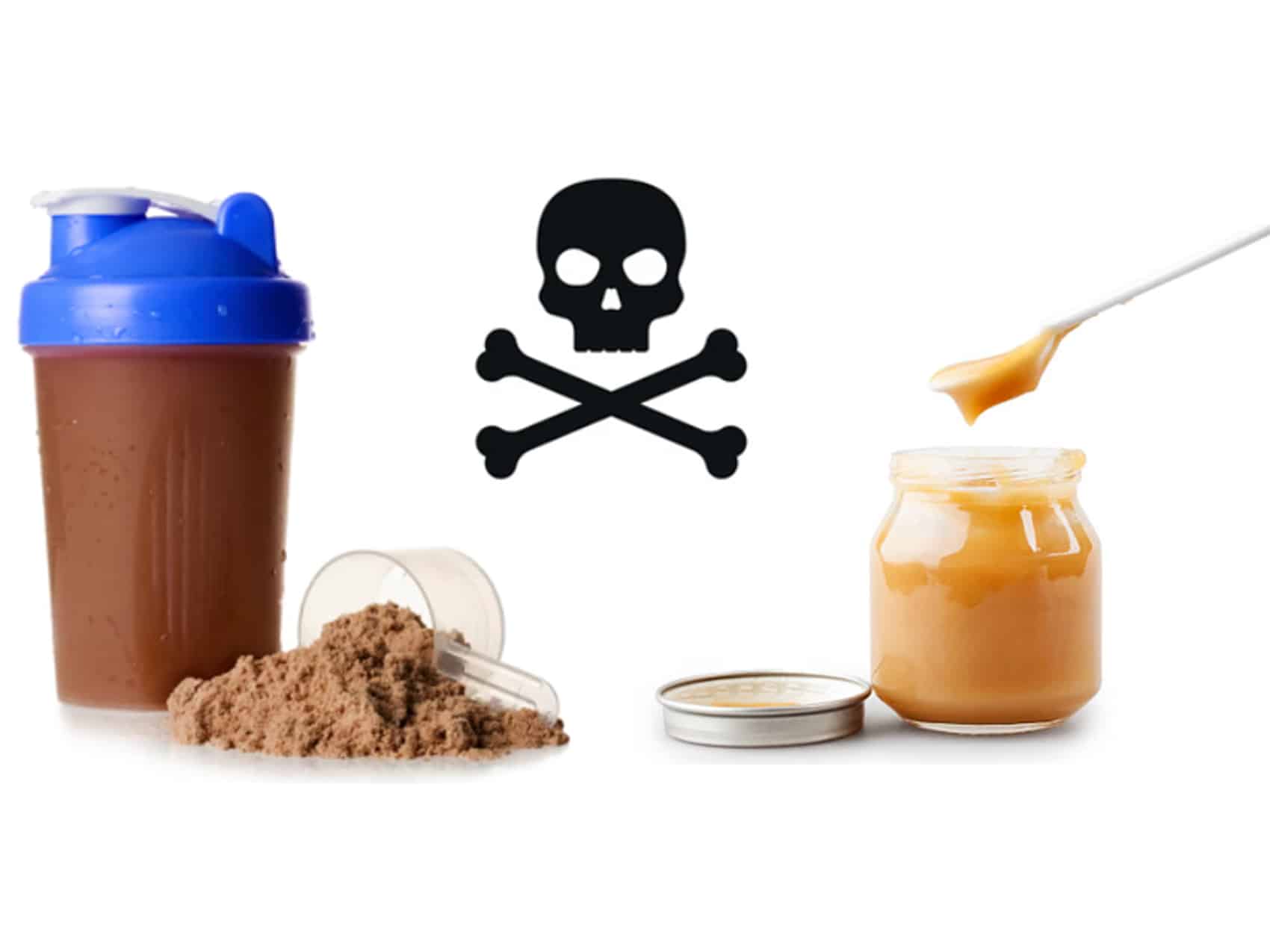
Once present in soil or water, these elements readily enter crops. From there, they move into the food supply. Protein powders have drawn particular scrutiny. Testing by Consumer Reports found that most products sampled contained more heavy metals per serving than recommended daily limits [4]. Plant-based powders showed especially elevated concentrations, with lead appearing most frequently. Many of these supplements rely on rice or peas as their primary ingredients.
Rice is especially vulnerable to contamination because of how it is cultivated. Unlike most staple grains, it grows in continuously flooded paddies. Waterlogged soil becomes oxygen-poor, triggering chemical changes that convert arsenic into more mobile forms that plants readily absorb. This process concentrates arsenic in rice grains regardless of whether contamination originates from natural geology or industrial residue. Peas, by contrast, are typically grown in well-drained fields and are therefore less prone to this specific mechanism of uptake. Even so, they are not immune. When cultivated in polluted soil or irrigated with contaminated water, pea plants can still accumulate measurable metal residues.
Most of the rice and peas in the world are grown in Asia, a region with high natural and legacy toxic metal contamination. The Bengal Basin contains some of the highest naturally occurring arsenic levels on Earth—high enough that long-term consumption of untreated groundwater can cause chronic poisoning—and the region produces tens of millions of tonnes of rice each year [5]. China, the world’s leading producer of peas, has reported that approximately 13% of their farmland is contaminated with unacceptable levels of cadmium, mercury, arsenic, lead, and chromium, mostly due to the knock-on effects of rapid and poorly regulated industrialization [6].
Processing can intensify the problem. When large volumes of crops are reduced into concentrated powders, any metals present become concentrated as well. Eating whole rice or peas regularly rarely results in dangerous exposure for most people. But when many kilograms of raw material are compressed into a small quantity of supplement without thorough purification, contaminants can accumulate to levels that are biologically significant. This concentration effect explains why protein powders are more likely to raise concern than whole foods.
Another food of concern is baby food. At least two recalls of popular brands were made due to unacceptably high lead levels in 2025 [7] and a report from the US House Committee on Oversight and Reform says that commercial baby foods are tainted with dangerous levels of arsenic, lead, cadmium, and mercury [8]. Babies are particularly vulnerable to the effects of metal toxicity because of their rapid brain development and high food consumption comparable to body weight. Even when levels of toxic metals are within set limits in food, the vulnerability of infants and children means that these low levels can have lasting impacts on their development.
Using highly selective, advanced separation technology during manufacturing to remove heavy metals from concentrated plant-based protein powders and baby food could significantly reduce exposure. Demand for protein powder is increasing [9] as is the prepackaged baby food market [10]. It’s becoming more important than ever to ensure that production includes effective metal testing and removal may prove essential for protecting consumers from contaminants they cannot see, taste, or easily avoid.
Why Conventional Separation Technology Falls Short
Removing toxic metals from complex food processing streams presents unique technical challenges. These metals often appear at ultra-low concentrations, coexist with high levels of benign salts and nutrients, and exist in multiple chemical forms. Traditional separation technologies such as precipitation, membrane filtration, and ion exchange frequently struggle to achieve the combination of selectivity, efficiency, and operational simplicity required for food-grade purification.
Many of these approaches rely on non-selective binding, leading to high reagent consumption, large volumes of secondary waste, and incomplete removal. In addition, regenerating ion exchange resins often requires aggressive acids or solvents, introducing further complexity, safety concerns, and waste disposal burdens. These limitations make it difficult to integrate traditional separation technologies into modern food and nutraceutical manufacturing processes where consistency, safety, and scalability are essential.
How Molecular Recognition Technology™ Enables Selective Metal Removal
Molecular Recognition Technology™ (MRT™) is a separation platform built around highly selective ligands immobilized onto solid-phase SuperLig® resin beads. These ligands are engineered to recognize and bind specific metal ions with extraordinary affinity, even in the presence of large excesses of competing species. This molecular-level selectivity enables precise separation performance that conventional technologies cannot easily replicate.
An MRT™ purification cycle operates in four straightforward phases:
- Loading phase: The feed solution is passed through a column packed with SuperLig® resin beads, where the target metal ion selectively and rapidly binds.
- Pre-elution phase: Residual feed solution is washed from the column, leaving only the bound target ion.
- Elution phase: A small volume of eluent releases the target metal, producing a highly purified, concentrated solution.
- Post-elution phase: Remaining eluent is rinsed from the column, preparing the system for the next loading cycle.
This simple, column-based operation allows MRT™ systems to achieve exceptional separation performance while minimizing chemical usage, waste generation, and process complexity. Because the target metal is concentrated into a small elution volume, recovery and disposal are both simplified, enabling safer and more sustainable process design.
Removing Lead, Mercury, Cadmium, Arsenic, and Chromium with MRT™
MRT™ has been extensively validated for the selective separation and recovery of toxic metals including lead, mercury, cadmium, arsenic, and chromium across a wide range of industrial and environmental applications. These same capabilities translate directly to food and nutraceutical processing environments, where trace contamination must be controlled with exceptional precision.
For lead, MRT™ systems achieve rapid and highly selective binding even in complex matrices, enabling deep removal to trace levels while preserving valuable product streams. Mercury, which exists in multiple chemical forms and readily cycles between oxidation states, can be selectively captured and concentrated using MRT™ resins designed specifically for Hg(II), supporting efficient removal at parts-per-billion levels.
Cadmium, one of the most biologically persistent and toxic metals, presents particular challenges due to its chemical similarity to zinc. MRT™ overcomes this limitation by leveraging ligand architectures that strongly discriminate between these closely related ions, allowing cadmium to be removed with exceptional selectivity and recovery. Arsenic, which exists in multiple oxidation states and aqueous species, can likewise be selectively separated using MRT™ platforms engineered to target its most mobile and toxic forms. Chromium, whether present as Cr(III) or the more hazardous Cr(VI), can be efficiently removed using tailored MRT™ resins that provide high binding affinity without extensive chemical pretreatment.
Across these applications, MRT™ systems routinely achieve:
- Ultra-high selectivity in complex solutions
- Removal efficiencies exceeding 99%
- Concentration of target metals into small, manageable volumes
- Minimal generation of secondary waste
This combination enables food and supplement manufacturers to integrate heavy metal removal directly into production workflows, rather than relying solely on upstream sourcing controls and post-production testing.
Engineering Safer Food Systems at Scale
As consumer demand for protein powders, baby food and nutraceutical products continues to rise, so too does the importance of controlling invisible contaminants that accumulate through global agricultural supply chains. Ensuring product safety requires not only rigorous testing, but also effective, highly selective, advanced separation technologies capable of removing toxic metals before they reach the final product.
MRT™ provides a practical, scalable pathway to achieving this goal. Its column-based format supports continuous operation, straightforward automation, and integration into existing manufacturing infrastructure. At the same time, its exceptional selectivity and low reagent consumption align with modern sustainability and green chemistry principles.
By enabling efficient removal of lead, mercury, cadmium, arsenic, and chromium from complex food processing streams, MRT™ offers manufacturers a powerful tool to protect consumer health, meet increasingly stringent regulatory requirements, and build resilient, future-ready production systems.
Sources:
[1] Cheema S, Hussain SI, Faheem MSB, Jalal AA, Rifai M, Dar A, Burhan M, Shahid A, Ali MS, Anwar A, Khalid M, Samadi S. Toxic heavy metal exposure and heart health: a systematic review and meta-analysis of 324,331 patients. BMC Cardiovascular Disorders. 2025 November 7. doi: 10.1186/s12872-025-05248-9. PMID: 41204397; PMCID: PMC12595707. (https://pubmed.ncbi.nlm.nih.gov/41204397/)
[2] Richard Bindler, Ingemar Renberg, Johan Rydberg, Thomas Andrén, Widespread waterborne pollution in central Swedish lakes and the Baltic Sea from pre-industrial mining and metallurgy, Environmental Pollution. July 2009. https://doi.org/10.1016/j.envpol.2009.02.003. (https://www.sciencedirect.com/science/article/pii/S0269749109000712)
[3] Deyi Hou, Xiyue Jia, Liuwei Wang, Steve P. McGrath, Yong-Guan Zhu, Qing Hu, Fang-Jie Zhao, Michael S. Bank, David O’Connor, and Jerome Nriagu. Global soil pollution by toxic metals threatens agriculture and human health. Science. 2025.doi:10.1126/science.adr5214 (https://www.science.org/doi/10.1126/science.adr5214#:~:text=We%20show%20that%2014%20to,public%20health%20and%20ecological%20risks.)§
[4] Paris Martineau. Protein Powders and Shakes Contain High Levels of Lead. Consumer Reports. October 14, 2025. https://www.consumerreports.org/lead/protein-powders-and-shakes-contain-high-levels-of-lead-a4206364640/
[5] Md. Shiblur Rahaman, Nathan Mise, Sahoko Ichihara. Arsenic contamination in food chain in Bangladesh: A review on health hazards, socioeconomic impacts and implications. Hygiene and Environmental Health Advances. June 2022. https://doi.org/10.1016/j.heha.2022.100004. (https://www.sciencedirect.com/science/article/pii/S2773049222000046)
[6] Wen M, Ma Z, Gingerich DB, Zhao X, Zhao D. Heavy metals in agricultural soil in China: A systematic review and meta-analysis. Eco Environ Health. 2022 Nov 24;1(4):219-228. doi: 10.1016/j.eehl.2022.10.004. PMID: 38077260; PMCID: PMC10702913. (https://pmc.ncbi.nlm.nih.gov/articles/PMC10702913/#sec4)
[7] healthychildren.org. Heavy Metals in Baby Food: Reducing Risk of Exposure. September 2025. https://www.healthychildren.org/English/ages-stages/baby/feeding-nutrition/Pages/Metals-in-Baby-Food.aspx
[8] Claire McCarthy, MD. Heavy metals in baby food? What parents should know and do. Harvard Health Publishing. March 5 2021. https://www.health.harvard.edu/blog/heavy-metals-in-baby-food-what-parents-should-know-and-do-2021030522088
[9] Cargill. Consumers are Seeking More Protein for Health and Taste in 2025. https://www.cargill.com/2025/consumers-are-seeking-more-protein-for-health-and-taste-in-2025
[10] Market Data Forecast. Baby Food Market Report. February 2026. https://www.marketdataforecast.com/market-reports/baby-food-market