

Lithium Solves the Puzzle of Energy Storage
Lithium is the foundation of the modern energy transition. Its unique electrochemical properties, notably the highest electric potential of any metal (3.7 eV) combined with the lowest atomic weight, make it irreplaceable in high-energy-density rechargeable batteries. Every electric vehicle, every grid battery, and every consumer device powered by a lithium-ion cell depends on a reliable, high-purity supply of this metal. Demand for batteries and lithium are one and the same and are both on an extreme trajectory. In 2020, the total demand for lithium worldwide amounted to 292 thousand metric tons of lithium carbonate equivalent. It is forecast that by 2030 this quantity will increase to approximately 2.5 million metric tons [1]. Complex feedstocks of lithium are currently constrained by processing bottlenecks, often because of a lack of highly selective processing technology.
Environmental and Economic Challenges of Lithium Recycling
The “urban mine” of discarded batteries is a promising source of valuable metals, which can be endlessly recycled with no detriment to quality, among them lithium. Spent batteries are shredded into “black mass”, named such because of its dark color and concentrated mixture of various metals and compounds. The composition of black mass can vary depending on the specific type of battery being recycled, but the amount of lithium contained in tested samples varies from 2.77-4.2% by weight [2,3], making it a significant source of the metal. The scale of this resource is staggering. From electric vehicles alone the volume of end-of-life lithium-ion batteries is expected to reach 20,500 kilotons by 2040 [4]. Currently, the global recycling capacity for lithium-ion batteries is around 350,000 tons per year [4], leaving the majority of lithium batteries to landfills. Discarded batteries leach cobalt, copper, nickel, and lead into groundwater and soil in quantities hazardous to human and environmental health [5]. The battery fires and explosions associated with improperly handled waste batteries are not theoretical; they are regular occurrences and have led to the classification of hazardous waste [6].
For national supply chain security, recycling also provides a strategic advantage. Dependence on brines from the Lithium Triangle, an Andean region spanning the borders of Argentina, Bolivia, and Chile that holds over 50% of the world’s known lithium reserves; as well as from Australian spodumene and Chinese refining, opens geopolitical vulnerability. An effective domestic recycling industry smooths demand-supply imbalances and extends the useful life of existing metal resources without opening new mines.
Despite the compelling economics and environmental arguments, lithium recovery rates from spent batteries remains below 1% [7]. The conventional recycling pathway for end-of-life lithium batteries involves leaching black mass in sulfuric acid, followed by a sequential series of purification operations: solvent extraction or precipitation for copper removal, hydroxide precipitation to remove aluminum, iron, and zinc, and further solvent extraction stages to separate nickel, cobalt, and manganese as sulphates. This leaves lithium as the last and most dilute component in the depleted solution. This approach tends to result in the extraction of lithium at the end of a lengthy process chain, leading to associated losses and creating challenges in managing complex waste. Upgrading this impure lithium-bearing solution to battery-grade lithium hydroxide requires additional concentration, ion exchange polishing, causticization, and crystallization steps; this midstream refining burden compounds capital expenditure and reagent consumption at every stage.
Direct Lithium to Product® (DLP™) Eliminates the Midstream and Provides a Superior Battery-Grade Product
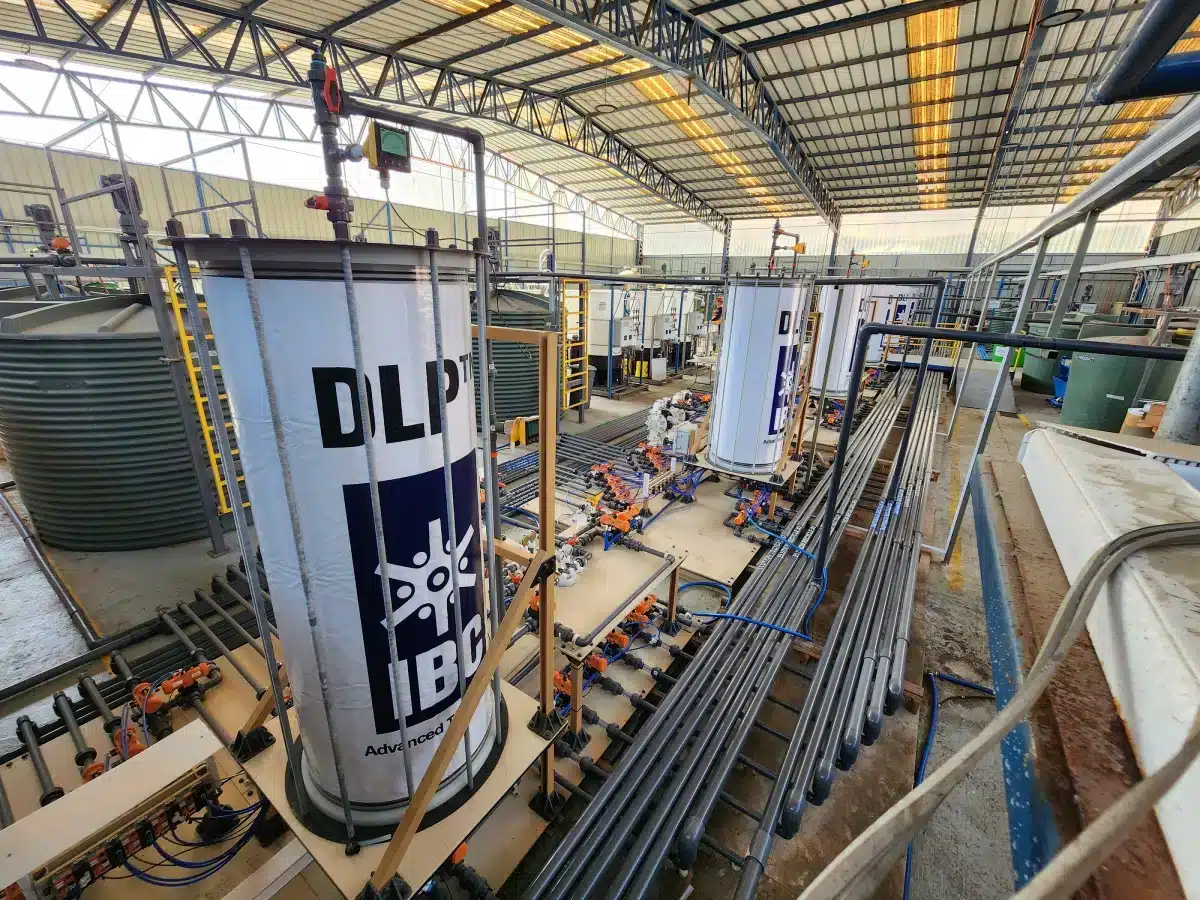
GreenLiT Pure Lithium™, an IBC Advanced Technologies, Inc. (IBC) subsidiary, solves the environmental and economic challenges associated with lithium recovery and production from increasingly complex feedstocks by providing highly selective lithium extraction with award winning Direct Lithium to Product® (DLP™) technology. Using Molecular Recognition Technology® (MRT™), DLP™ produces battery-grade lithium without requiring an expensive midstream. Unlike conventional means of lithium recovery, DLP™ integrates extraction and refining into a single process. Because DLP™ achieves battery-grade selectivity and purity at the point of extraction, there is no crude intermediate requiring downstream upgrading. The output of the DLP™ process is superior battery-grade lithium hydroxide or lithium carbonate, ready for direct use in manufacturing [8].
High selectivity eliminates the need for upstream pre-treatment and downstream polishing stages and enables processing of feedstocks that are inaccessible to classical methods. This includes high-complexity recycling leachates and unconventional sources with challenging impurity profiles [9]. Battery cathode manufacturers have stringent requirements for trace impurities in lithium hydroxide and lithium carbonate; DLP™ produces 99.9%+ purity product directly at the resource site, without the quality risk and additional cost of upgrading a lower-grade intermediate. The modular, skid-based architecture of DLP™ allows deployment to be staged incrementally, reducing peak capital requirements and shortening the time to first revenue. This advantage is of particular relevance for recycling applications, where deployment at or near battery processing facilities eliminates the need to transport black mass to centralized refining hubs.
Beyond capital structure, DLP™ eliminates the midstream refinery as a distinct cost center. The operating costs, logistics, third-party refining margin, and yield losses associated with a dedicated off-site refinery are removed from the project economics entirely. Waste generation is near-zero, as the DLP™ system does not employ organic solvents or harsh precipitation chemicals. This eliminates the most problematic waste streams from the conventional hydrometallurgical flowsheet. Energy consumption is reduced substantially: DLP™ operates at ambient temperature and atmospheric pressure, with no calcination, evaporative concentration, solvent recovery, or electrolysis, resulting in a process complexity that is radically compressed. The conventional flowsheet of ten to fifteen distinct unit operations is consolidated into a single integrated process, reducing staffing requirements, physical footprint, and logistical costs.
The future of energy is in lithium-ion batteries, and demand for a reliable supply of battery grade quality lithium will increase substantially in the coming decades. DLP™ provides key advantages as a technology that maximizes production and eliminates superfluous pre-processing and resource-heavy mid-stream refining. Green lithium is produced with the carbon free DLP™ process, using minimal water and energy, with no toxic reagent streams. IBC’s DLP™ technology offers a lithium supply chain that can meet the most demanding technological and regulatory demands.
Sources
[1] Gielen, D. and M. Lyons. 2022. Critical materials for the energy transition: Lithium. International Renewable Energy Agency, Abu Dhabi. https://www.irena.org/-/media/Files/IRENA/Agency/Technical-Papers/IRENA_Critical_Materials_Lithium_2022.pdf
[2] Massa, M., et al. May 2025. Determination of lithium concentration in black mass using laser-induced breakdown spectroscopy hand-held instrumentation. https://pmc.ncbi.nlm.nih.gov/articles/PMC12092582/#Sec4
[3] Peschel, C., et al. February 2022. Comprehensive Characterization of Shredded Lithium-Ion Battery Recycling Material. https://chemistry-europe.onlinelibrary.wiley.com/doi/10.1002/chem.202200485
[4] Analysis of EV-Battery End-of-life. 2024. United Nations Development Program. https://www.undp.org/sites/g/files/zskgke326/files/2025-01/analysis-of-ev-battery-end-of-life.pdf
[5] Kang, D., et al. 2013. Potential environmental and human health impacts of rechargeable lithium batteries in electronic waste. https://pmc.ncbi.nlm.nih.gov/articles/PMC5920515/#SD1
[6] Lithium-Ion Battery Recycling. 2025. Environmental Protection Agency. https://www.epa.gov/hw/lithium-ion-battery-recycling
[7] Wang, J., et. al. 2021. Recycling Lithium Cobalt Oxide from Its Spent Batteries: An Electrochemical Approach Combining Extraction and Synthesis. https://doi.org/10.1016/j.jhazmat.2020.124211
[8] Izatt, R. M. 2022. MRT™: The Key to Green Recycling of Lithium-ion Batteries, White Paper. https://ibcmrt.com/publications/?publish_paper=C21
[9] Matte, J.J. 2025. 2025 Maricunga Lithium Project, 16th Lithium Supply and Battery Raw Materials Conference Las Vegas, NV, June 23-26. https://ibcmrt.com/publications/?publish_paper=C24